
A name known through the record
Charg, translated as 'rooster' in later writing, is the alias most consistently attached to this figure. His exact birth date, childhood, education and family biography remain unverified. A press chronology gives an age of 45 at his death; a birth around 1961–62 is therefore an inference, not a documented date. Similar names and unnamed men in Darra photographs must not be merged into this biography.
Reported
A credible source reported this, but the archive has not independently established it.2003: the first located arrest report
Dawn's August 2003 report identifies Amir Saeed alias Charg, from Darra, as an alleged kidnapper and car-snatcher arrested and transferred to Peshawar police. An arrest establishes an encounter with the authorities; it does not supply the eventual outcome of a criminal case.
Reported
A credible source reported this, but the archive has not independently established it.2005: allegations across provincial lines
A June 2005 report places Charg among men wanted by Sindh, Punjab and NWFP police and says he refused to surrender during an operation. Separately, an FIR report names Amir Said alias Charg among accused in a kidnapping-and-murder case. No final judgment is supplied by either account. Descriptions of a 'massive mafia' go beyond the available evidence: neither a complete membership list nor a reliable measure of its scale has been located.
Reported
A credible source reported this, but the archive has not independently established it.A dispute that reached the highway
In November 2005, residents described firing between Charg's group and a rival family that interrupted the Peshawar–Kohat road near Qasimkhel. This is a reported connection to a place and a dispute. It does not establish Charg's own tribal subsection or make all residents participants in an armed network.
Reported
A credible source reported this, but the archive has not independently established it.The 2006 court story: collective detention
A 2006 court report concerns relatives' detention under the FCR. The High Court rejected the procedure; it did not adjudicate Charg's alleged crimes. These are separate questions: how officials may detain people, and whether an accused person committed a particular offence. A family's detention should never be used as evidence of every relative's guilt.
Reported
A credible source reported this, but the archive has not independently established it.Income and influence: what can be said
Contemporary reports associate him with alleged vehicle theft, kidnapping and other offences. A later recollection describes vehicle bargaining at Tor Sappar. Car theft, ransom and vehicle extortion must therefore remain reported or proposed income sources, not an audited account of earnings. No verified annual income, asset inventory, employment roll or evidence of lawful business has been found. Claims that he paid or protected his associates also need direct testimony or records before publication as fact.
Reported
A credible source reported this, but the archive has not independently established it.6 August 2007: killing and militant authority
A contemporary press chronology reports that suspected pro-Taliban militants killed Ameer Sayed after threats over alleged criminal activities. Dawn's following report also describes his death as the trigger for confrontation. Saira Aquil's later study places the killing in a broader account of militants using anti-crime action to claim legitimacy. That is an interpretation of a struggle for authority; it does not make a killing lawful or prove every accusation made against the dead man.
Corroborated
More than one independent source substantially agrees on the core fact.The aftermath, and why totals differ
One report counted five bodies in a stage of the fighting. Another revised an early 27-death estimate to three confirmed. The News later described a broader confrontation with more than forty deaths and reported a subsequent dispute over a coalmine. These figures have different scopes and publication moments. They cannot responsibly be combined into a single precise total for Charg's killing or treated as a complete list of victims. The consequences reached families, homes, movement through the corridor and disputes over local control.
Disputed
Credible accounts materially differ; the conflict is part of the record.The paradox: harm, memory and the rule of law
The located record does not establish a public-benefit accomplishment or substantiate charitable acts attributed to Charg in local conversation. His notoriety should be examined through the alleged harm to victims and the limits of the evidence. Later comparisons with militant rule can explain why a community's memory changes, but a less frightening alternative is not automatically a hero. Equally, serious allegations do not justify execution without trial or the punishment of relatives. This profile preserves both concerns: accountability for alleged crime and accountability for the authorities or armed groups responding to it.
Reported
A credible source reported this, but the archive has not independently established it.Media and imagery
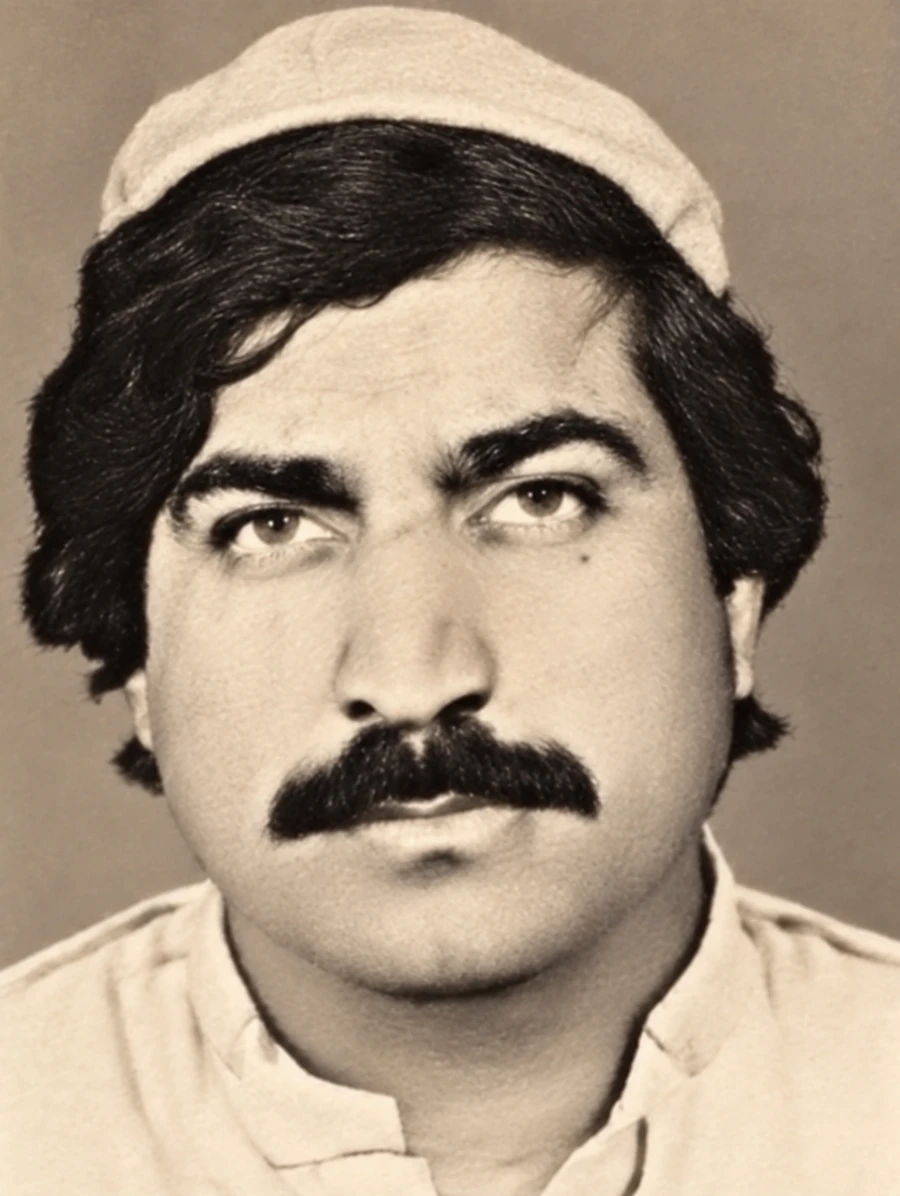
The contributor has supplied an earlier image and a restored version, identifying the person as Ameer Saeed alias Charg. The original photographer, date, chain of custody and broader reuse rights remain unknown, and independent authentication has not been completed. The restored version can alter fine detail, so both contributions are shown with that context. The workshop image documents Darra's craft setting and does not identify him. VICE and BBC productions concern the region rather than a verified biography of Charg.