A guest space and a gathering space
Research in Swat and Lower Dir describes hujras accommodating visitors and hosting conversation, weddings, mourning and jirgas. Ownership could belong to a person, family or wider group, and a village could have several. Hospitality therefore depended on particular hosts and relationships as well as a shared cultural ideal.
Reported
A credible source reported this, but the archive has not independently established it.Learning through company
Muhammad Ayub Jan's Malakand interviews from 2008–2009 describe younger men learning conduct through friendship, hospitality and discussion. Participants also debated political and cultural identity. This account helps explain why a hujra can carry knowledge between generations: ordinary conversation is itself part of the record, alongside formal speeches and famous personalities.
Reported
A credible source reported this, but the archive has not independently established it.A Darra research account
Adnan Khan's 2016 Darra thesis abstract includes visits by friends, relatives and strangers among the social relationships studied. It reports damage to social and economic life during militancy. The abstract supports investigating these disrupted relationships; it does not provide a census of hujras or a description of every gathering today.
Reported
A credible source reported this, but the archive has not independently established it.One named place in a firsthand account
Syed Ali Hamid's 2019 recollection includes a photograph captioned as Shoaib Afridi's hujra in Darra around 2002. It supplies a named, dated example connecting hospitality with a craftsman's working life. The original publication remains the viewing source because the photograph's reuse permission has not been established.
Reported
A credible source reported this, but the archive has not independently established it.Who could take part?
The Swat and Lower Dir study also identifies unequal access. Its hujras were predominantly male spaces; women and poorer residents could be excluded from decisions about assistance. A full account should ask who hosted, spoke, received help or remained outside. Respect for hospitality can sit alongside an honest account of participation and influence.
Reported
A credible source reported this, but the archive has not independently established it.Read the photographs by place
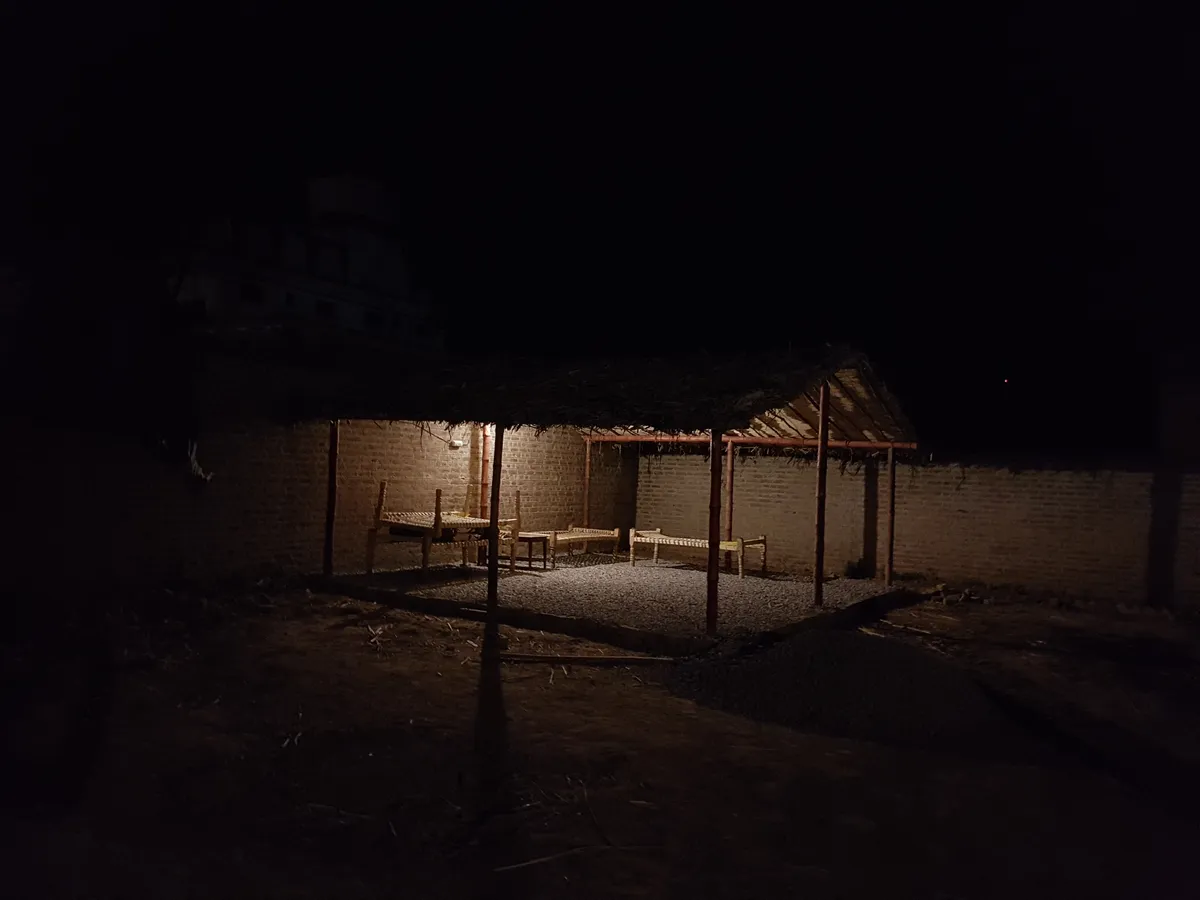
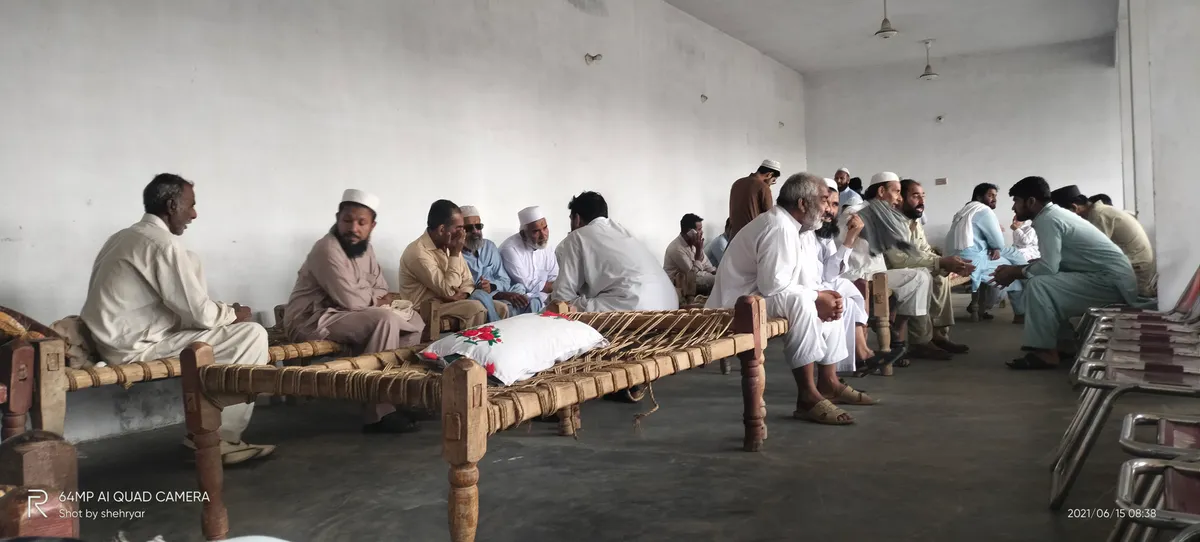
The gallery shows Syed Haad's 2018 Mardan hujra photograph and Shehrology's 2021 image of a mourning gathering in Hund. Both have explicit Creative Commons licenses. They document particular regional settings; neither shows Darra, Shoaib Afridi's hujra or a gathering connected with Charg. Local photographs can add a different record when their creator, date, location and permission are known.